
A safer summer on the roof - the benefits of electric equipment

Updated: Jul 24

As summer projects ramp up and temperatures rise, it is easy to assume that electric roofing equipment is primarily a cold-weather solution, primarily used for drying or overcoming winter conditions.
In reality, electric roofing technology delivers significant benefits all year round, including during the busiest summer months.
For decades, the roofing industry has relied on LPG gas torches as the standard method for drying, activating and bonding materials. Yet despite ongoing advances in technology, many contractors still accept the risks associated with naked flames on roofs as unavoidable. But in an era of increasing safety standards and tighter site controls, that assumption deserves to be challenged.
Safety remains critical in every season
A common misconception is that fire risk reduces during the summer, but in practice, the opposite is often true. Warmer weather typically brings drier conditions, higher site activity and greater pressure to complete work quickly. Roofing materials can also become more volatile under heat, while longer daylight hours extend working periods.
In these conditions, the continued use of open flames presents an avoidable risk. Electric systems remove that risk entirely. With no gas cylinders to transport, store or secure, and no on-roof ignition source, electric roofing equipment eliminates one of the most significant hazards on site.
Every roofing professional is aware of the disruption caused by roof fires and the serious financial, reputational and human consequences that can follow. Electric systems shift the focus from managing fire risk to removing it altogether.
Supporting longer, more efficient working days
Summer is often the busiest period for roofing contractors, making efficiency just as important as safety.
Traditional gas-based systems frequently require extended fire-watch periods after work is completed, limiting productivity and increasing labour costs. Electric systems significantly reduce or eliminate this requirement, allowing contractors to make better use of daylight hours and improve programme efficiency.
The result is a more streamlined and predictable installation process that benefits both contractors and clients.
Electric solutions for all seasons
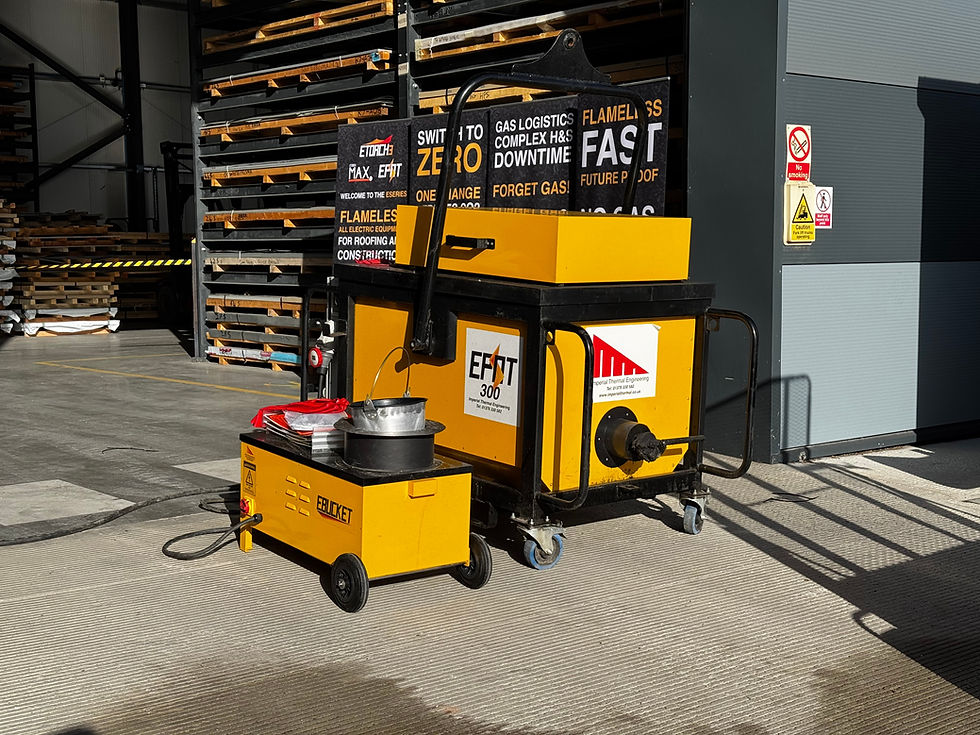
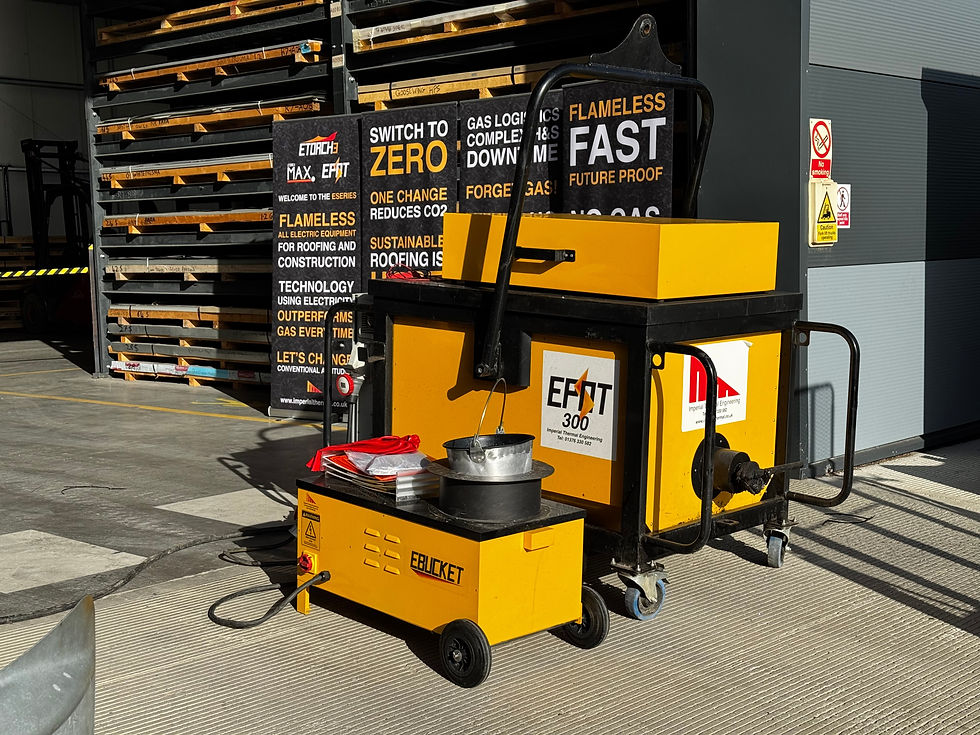
Another misconception is that electric roofing equipment is only suitable for cold or wet weather applications. In reality, systems such as the Eseries from Imperial Thermal Engineering are designed as complete, all-season solutions.
The range includes;

These tools are not weather-dependent. Even in warm conditions, roofing systems still require surface preparation, membrane activation and controlled heating of materials. Electric equipment provides consistent performance without introducing open-flame hazards.

Meeting modern construction expectations
Across the wider construction industry, safety and environmental expectations are evolving. In sectors such as healthcare, education, food production and data infrastructure, no-flame policies are becoming increasingly common, with electric methods often specified as standard.
Contractors who continue to rely solely on gas equipment may find themselves increasingly restricted when tendering for modern projects. Electric systems align directly with these changing requirements, supporting safer, cleaner and more controlled working practices.
Planning for power and changing habits
Most commercial sites already have suitable power infrastructure in place, with systems such as the Eseries operating from 32-amp or 63-amp three-phase supplies. Where grid access is limited, portable generation offers a practical alternative.

Electric roofing systems are not just winter tools. They are practical, year-round solutions designed for modern construction realities. As more contractors experience the safety, efficiency and operational benefits, the question is likely to shift from why adopt electric systems, to why continue using open flames at all.

Comments